


GPT 5.4
GPT-5.4 combines advanced multi-step reasoning, high-quality code generation, AI agent automation with cross-application capabilities, and long-context processing up to 1M tokens, along with Mini and Nano variants for different performance and cost needs.
Automatically append previous messages to maintain multi-turn context. May increase token usage.
System messages provide context and instructions that guide the AI's behavior throughout the conversation
Controls randomness: 0 = focused, 2 = creative
Maximum response length
Maximum completion tokens (takes precedence over max_tokens)
Nucleus sampling: 0.1 = focused, 1.0 = diverse
Penalizes frequent tokens: -2.0 to 2.0
Penalizes repeated tokens: -2.0 to 2.0
Display AI reasoning processes when available
No messages yet. Start the conversation!
GPT-5.4: Built for Real Professional Work
A model designed to handle demanding work with steadier results, stronger tool use, and less back-and-forth.
Powerful Features for Real Work
A model that focuses less on sounding polished and more on actually getting complex work done.
Stable Professional Output
It handles documents, spreadsheets, presentations, and other work that needs to be useful, not just polished.
Steering While it Works
GPT-5.4 Thinking can show a plan first, so you can steer it before the task is fully finished.
Better Long-task Retention
It keeps the thread of a long task better, which helps it stay on target when the work becomes complicated.
Native Computer Use
It can work across apps and websites using screenshots, mouse actions, and keyboard actions.
Better Tool Search and Use
Tool search helps it find the right tool in a large ecosystem and keep the workflow moving.
More Token-efficient and Faster
It is OpenAI’s most token-efficient reasoning model so far, so many tasks need fewer tokens and feel faster.
Designed for real-world workflows
GPT-5.4 is built to handle practical tasks across documents, tools, and complex workflows. From structured knowledge work to multi-step execution, it focuses on delivering results that are usable, consistent, and closer to completion.
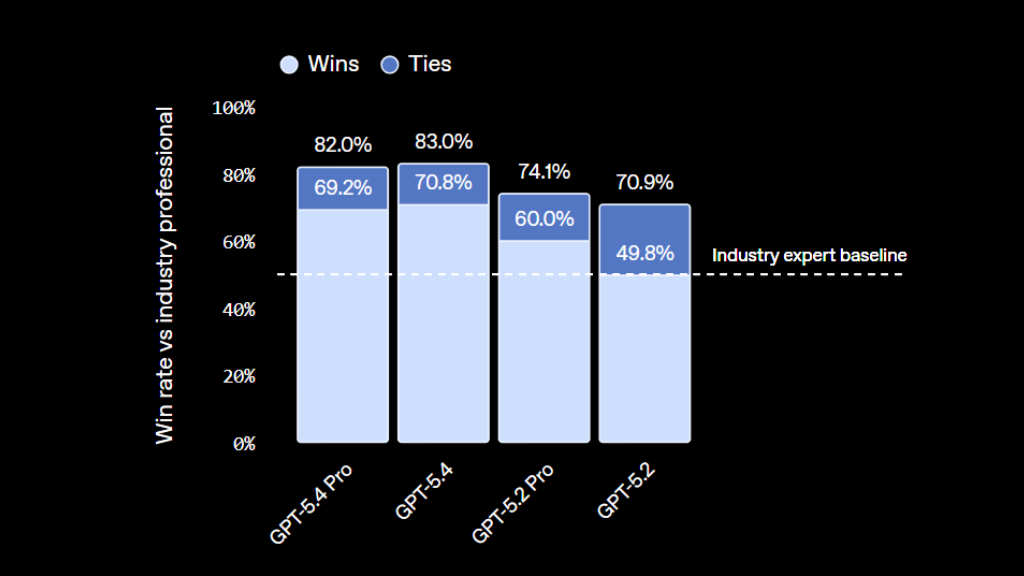
Built for Knowledge Work That Needs Real Polish
GPT-5.4 is built for work that has to look good and make sense at the same time. It performs especially well on documents, spreadsheets, and presentations, where structure, clarity, and finish all matter. Instead of generating something you still need to fix line by line, it aims to produce output that already feels close to the final version. That makes it a better fit for teams and professionals who care about speed, quality, and fewer revisions.
Made for Computer Use Across Screens and Apps
One of GPT-5.4’s biggest upgrades is its native ability to use a computer. It can read what is on screen, reason over screenshots, and act through mouse and keyboard inputs across websites and software. That makes it especially useful for workflows that move between browser tabs, desktop apps, and form-filling tasks. OpenAI also highlights stronger visual understanding, which helps the model interpret layouts, screenshots, and document-heavy interfaces more reliably.
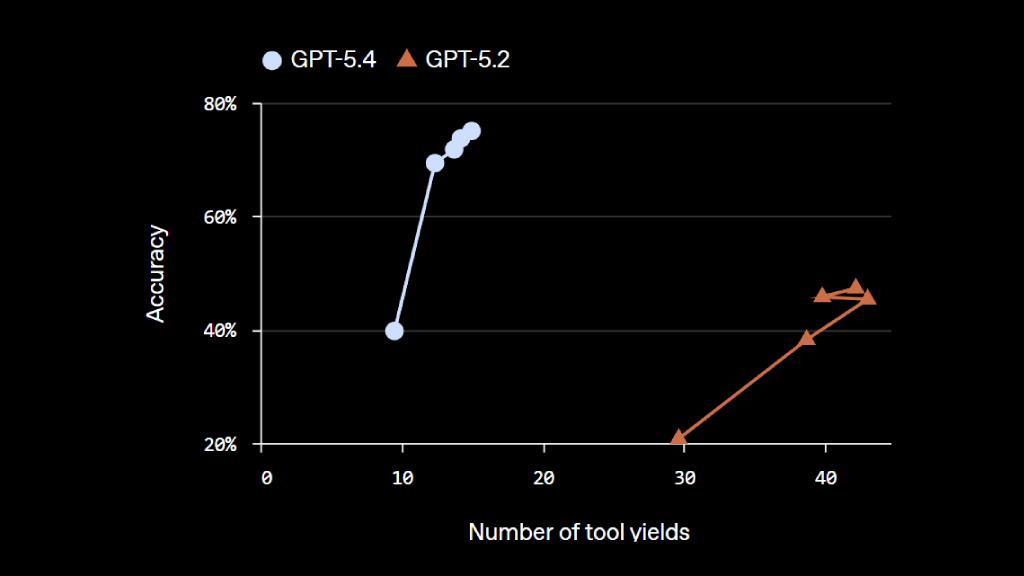
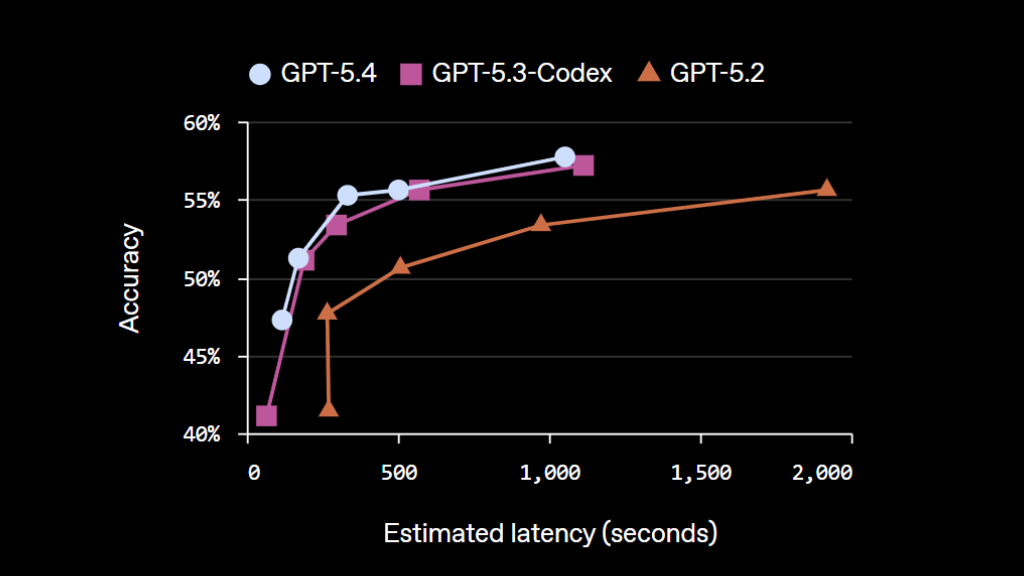
Stronger Coding for Long-running Workflows
GPT-5.4 combines strong coding ability with better tool use and better support for complex work that does not finish in one shot. It is built for long-running tasks where the model needs to iterate, verify, and keep moving with less human intervention. In practice, that makes it a better fit for development workflows, agentic systems, and tasks that depend on repeated tool use. The result feels less like a single answer and more like a work session that keeps making progress.
GPT-5.4 vs Gemini 3.1 Pro vs Claude Sonnet 4.6
Each model is built with a different goal in mind. Instead of asking “which one is better,” it is more useful to understand what kind of work each model is best at.
| Category | GPT-5.4 | Gemini 3.1 Pro | Claude Sonnet 4.6 |
|---|---|---|---|
Positioning | Professional work model | Advanced reasoning model | Long-context & stable model |
Core Strength | Tool use + computer interaction | Deep reasoning + large data understanding | Long context + stability |
Best At | Docs, spreadsheets, automation, agents | Math, research, complex reasoning | Long documents, writing, planning |
Tool Use | ⭐⭐⭐⭐⭐ | ⭐⭐⭐ | ⭐⭐⭐ |
Computer Use | ⭐⭐⭐⭐⭐ | ⭐⭐ | ⭐⭐⭐ |
Coding | ⭐⭐⭐⭐ | ⭐⭐⭐⭐ | ⭐⭐⭐⭐⭐ |
Long Context | ⭐⭐⭐⭐ | ⭐⭐⭐⭐ | ⭐⭐⭐⭐⭐ |
Speed / Efficiency | ⭐⭐⭐⭐⭐ | ⭐⭐⭐⭐ | ⭐⭐⭐⭐ |
Weakness | Higher per-token cost | Less workflow-oriented | Weaker tool automation |
GPT 5.4 FAQs
What is GPT-5.4?
It is OpenAI’s frontier model for professional work, designed for long-running tasks, tool use, and reliable execution.How is GPT-5.4 different from GPT-5.2?
GPT-5.4 is positioned as more capable for knowledge work, computer use, and tool-heavy workflows.Is GPT-5.4 good for coding?
Yes. OpenAI highlights strong coding performance and better support for long, complex work.Can GPT-5.4 use a computer?
Yes. OpenAI says it performs strongly on computer-use tasks that involve screenshots, mouse actions, and keyboard actions.What kind of tasks is GPT-5.4 best for?
It fits documents, spreadsheets, presentations, automation, agents, and other professional workflows.
